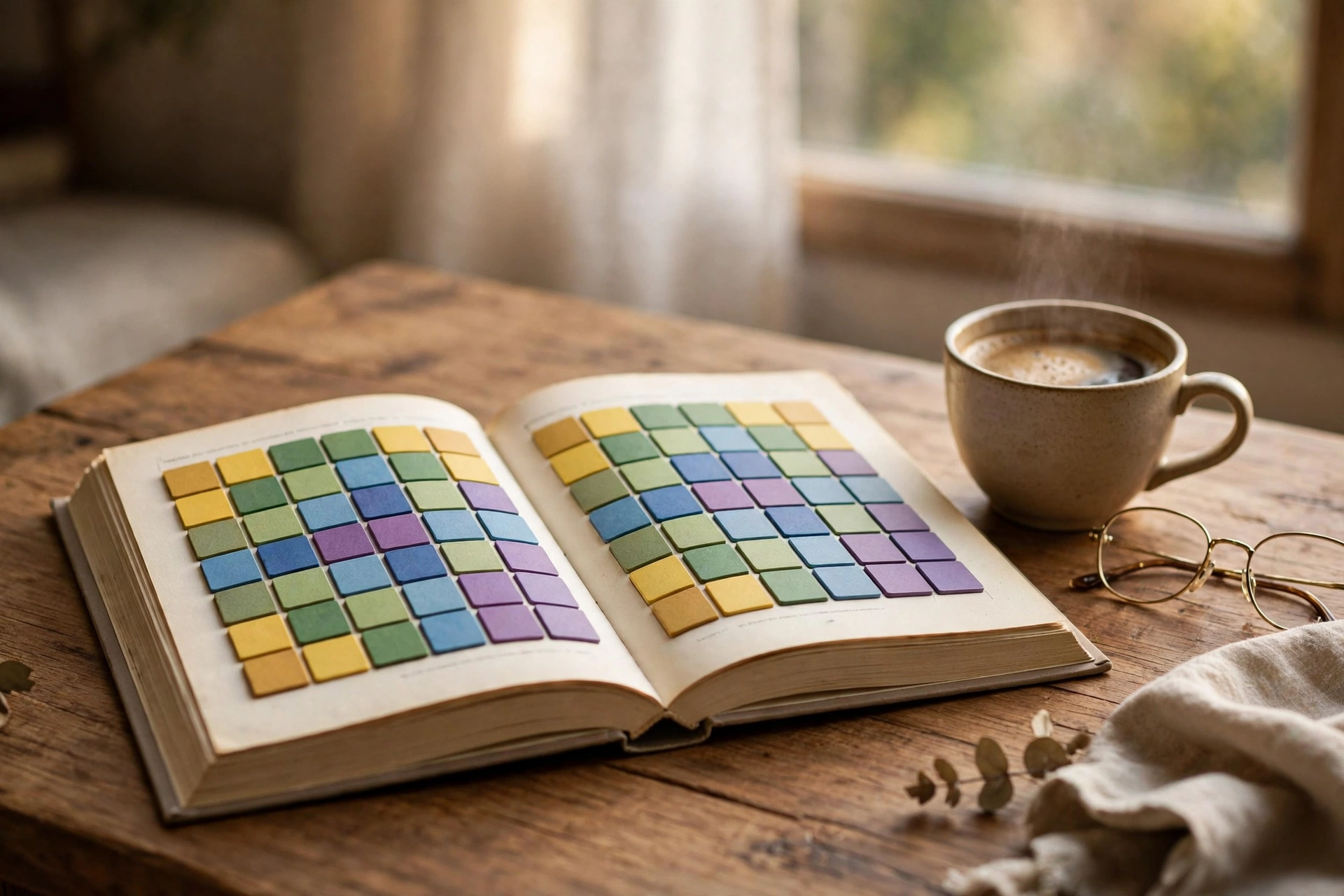
The nyt connections book takes the daily word game off the screen and puts it on paper. The official print collection holds more than 100 Connections puzzles, edited by Wyna Liu, the same editor who builds the daily game for the New York Times. She introduced the book on the TODAY show, talked viewers through what it is, and played a puzzle live on air. If you solve the daily grid every morning and still want more, this collection was made for you. Below you’ll find what the book actually is, who edited it, what’s inside, how it stacks up against the app, and who gets the most out of buying it.
What Is the Official NYT Connections Book?
It’s an official print collection of more than 100 Connections puzzles, published under the New York Times name and edited by the game’s own editor. Instead of waiting for one new grid each morning, you get a whole stack of boards in a single volume, ready whenever you are. Each puzzle works exactly the way the daily game works: sixteen words, four hidden groups of four, and one correct way to sort them.
So what exactly is the nyt connections book at its simplest? It’s the same game you already know, moved from a phone screen to printed pages. The rules haven’t changed. The group colors haven’t changed. The sneaky purple category hasn’t changed. What changes is the format around it: no app, no daily release schedule, no waiting until tomorrow for the next board.
That format shift matters more than it sounds. The daily game trains you to solve in short bursts, one puzzle with breakfast, then nothing until the next morning. A book breaks that rhythm completely. You can solve three puzzles back to back on a train. You can hand the book to someone across the table and race them on the same grid. You can leave it on the coffee table and pick it up for five minutes at a time.
The book also gives non-players an easy way in. Not everyone wants to download an app or create an account just to try a word game a friend keeps mentioning. A printed copy removes every bit of that friction. Someone can hand you the book, point at a grid, and you’re solving within a minute, no sign-up, no tutorial screens, no notifications. Plenty of daily players first met the game exactly that way, through somebody else’s screen, and the book formalizes that hand-off.
The collection also works as a record of what makes this game special. Connections grew from a daily habit into one of the most talked about word games in the world, and a print edition is the kind of thing that only happens once a game reaches that level. Plenty of apps never leave the phone. This one earned a bookshelf spot, and it did it with the game’s own editor in charge of the pages. For readers who want the rules refresher before diving in, our guide on how to play Connections covers the basics step by step.

Who Is Wyna Liu?
Wyna Liu is the New York Times editor who creates and edits the daily Connections puzzles. Every grid you solve in the app passed through her desk. She picks the words, builds the groups, plants the traps, and decides which four words will fool almost everyone on a given morning. When players groan about a cruel purple category, they’re groaning about one of her decisions.
Her role is why the book carries weight. This isn’t a knockoff puzzle collection borrowing the game’s name. The puzzles come from the person who defines what a Connections puzzle should feel like: fair, solvable, and just devious enough that the answer makes you smile once you see it. She knows where players look first, which false groups they’ll chase, and how to hide a real group in plain sight.
Liu also became the public face of the game. She presented the book on the TODAY show, explained how it works, and played a puzzle live with the hosts watching. That appearance told viewers two things at once: the book is genuinely hers, and the game has grown big enough to earn a segment on national morning television. For a puzzle editor, that’s rare territory.
Her editing hand also shapes the book’s overall feel. A daily puzzle has to stand alone, but a collection has to hold together across 100+ boards. Difficulty can’t spike randomly from one puzzle to the next, and the same trick can’t carry every purple group. Players who work through the book in order will notice her pacing: gentler boards to warm you up, harder stretches that test whether the warm-up actually taught you anything, and variety in the category types so the book never settles into a single rhythm. That sequencing is editorial work, and it’s invisible when it’s done well.
Knowing the editor matters for one more reason. Daily players develop a feel for her style over time, the recurring tricks, the wordplay patterns, the categories that bend a word across two meanings. A collection she edited front to back lets you study that style in concentrated form, puzzle after puzzle, instead of one sample per day.
What Is Inside the Book
Inside, you get more than 100 puzzles spread across difficulty levels, printed in the game’s color-coded style, with the answers collected at the back. The boards look familiar: sixteen words waiting to be sorted into four groups of four, with yellow as the most straightforward group and purple as the trickiest, the same ladder the daily game uses. If purple still trips you up, our breakdown of the purple category explains how those wordplay groups are built.
The difficulty spread is the part daily players will appreciate most. In the app, you get whatever difficulty the day brings. Some mornings are gentle, others are brutal, and you don’t get a say. In a book of 100+ puzzles, you choose. Feeling sharp? Jump to a harder board. Teaching a friend the game? Start with an easier one and let them build confidence before the traps arrive.
Solving on paper changes the experience in small, real ways. There’s no timer ticking anywhere. There’s no mistake counter forcing the game to end after four wrong guesses, either. You sort the words your own way, pencil in hand if you like, and you decide when you’re done. Finished a board, or given up on it? Flip to the answers at the back and check yourself. The honesty system is yours to run, and plenty of players find that freedom relaxing rather than risky.
You’re also free to work through the puzzles in any order you like, and that freedom changes how people use the book. Plenty of readers skip around, saving the boards that beat them and coming back days later with fresh eyes. Others solve in pencil and pass the book on with the pages clean, or work in pen and keep it as a finished record of their solves. A stuck puzzle isn’t a dead end here. It’s just a page you fold down and revisit, which is a patience the daily game’s one-shot format never allows.
Paper also makes the book social in a way a phone isn’t. Two people can lean over the same page. A family can pass it around after dinner. Someone can read the sixteen words aloud while everyone else shouts guesses. The daily game is mostly a solo ritual you share afterward as a grid of colored squares. The book turns the solving itself into a group activity, and for a lot of households that’s the real upgrade. That’s the whole pitch of the nyt connections book: the same puzzles, in a format built for the kitchen table as much as the commute.
Book vs the Daily Game
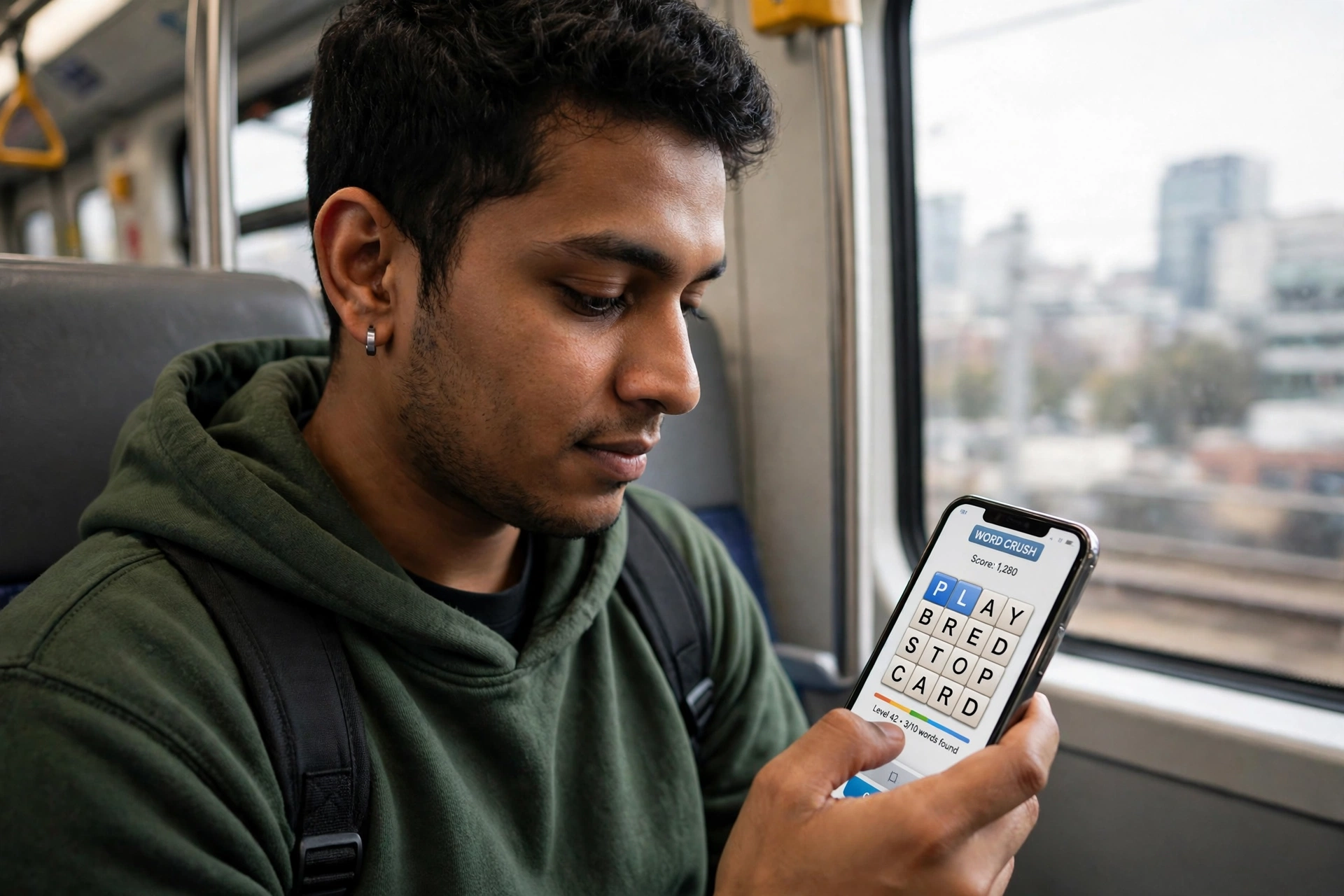
The book gives you 100+ puzzles at once with no schedule and no enforced limits, while the daily game gives you one free puzzle a day with strict rules and easy sharing. Neither replaces the other. They suit different moments, and most serious players will end up using both. Here’s how they compare side by side:
| Feature | The Book | The Daily Game |
|---|---|---|
| Format | Print collection you solve on paper | NYT Games app and website |
| Number of puzzles | 100+ in one volume | One new puzzle per day |
| New puzzles | The full set is there from day one | A fresh grid arrives every morning |
| Cost | A one-time purchase | Free to play in the app, with subscription options |
| Mistake limit | None enforced, you check answers yourself | Four mistakes ends the game |
| Sharing results | Show the page, or solve together in person | One tap shares your colored results grid |
The daily game keeps two advantages the book can’t copy. First, the shared moment: everyone you know solves the same puzzle on the same morning, and comparing results is half the fun. Second, discovery never ends. The app keeps serving new boards forever, including every past daily puzzle in the archive, so the supply renews itself daily.
What the book wins on is control. You pick the puzzle, the pace, and the difficulty, and nobody’s mistake counter can cut a good session short. Choosing between the nyt connections book and the app isn’t really a choice for most fans. The app is the daily ritual. The book is what you reach for when the ritual ends too quickly.

Who Should Get the Book
The book suits four kinds of people best: gift buyers, travelers, collectors, and beginners who want to practice without a daily clock. If you see yourself in any of those groups, the collection earns its shelf space quickly.
Start with gifts, because this is an easy present for a hard-to-buy-for person. Millions of people play Connections every day, talk about it constantly, and own nothing connected to it. An official book edited by Wyna Liu lands well with exactly that person. It works for birthdays, holidays, and the office gift exchange where every other idea falls flat.
Travelers get a different kind of value. No signal, no battery, no problem: the book works on a plane, in a waiting room, or on a train with patchy coverage. A flight gives you hours of dead time, and 100+ puzzles fill those hours better than most in-flight screens. Campers and beach readers get the same benefit, since paper doesn’t mind sand, glare, or a dying phone.
Collectors have their own logic. A first official print collection of a game this big is the kind of item fans keep, and it sits naturally next to crossword collections and other puzzle books. It marks the moment a daily app became a cultural fixture.
Daily devotees deserve a mention too, even though they weren’t in the list above. If you finish the morning puzzle in four minutes and spend the rest of the day mildly annoyed that it’s over, you already understand the problem the book solves. It gives you a second serving on demand, and a third, without touching tomorrow’s grid or replaying old boards on a screen. For streak-minded players, it’s also a safe training ground: practice boards that can’t hurt your stats, your streak, or your shared results.
Then there are beginners, the group that might benefit most of all. Learning Connections in the app means one shot per day, with a four-mistake limit ending your lesson fast. In the book, a new player can solve ten puzzles in a weekend, at any difficulty, with no clock and no lockout. That’s how patterns sink in. If that sounds like the practice you need, the nyt connections book fits the job.
Frequently Asked Questions
Is the NYT Connections book official?
Yes. The nyt connections book is the official print collection from the New York Times, and its puzzles are edited by Wyna Liu, the editor behind the daily game.
How many puzzles are in the book?
The book contains more than 100 Connections puzzles in a single volume. They span different difficulty levels, so you can pick an easier board or a harder one whenever you open it.
Who edited the puzzles in the book?
Wyna Liu edited the collection. She’s the New York Times editor who creates and edits the daily Connections puzzles, and she presented the book herself on the TODAY show.
Does the book include the answers?
Yes, the answers are printed at the back of the book. You solve each puzzle on paper, then flip to the back to check your groups whenever you’re ready.
Do I need a subscription to use the book?
No. The book is a one-time purchase, and it’s yours to keep and solve as often as you like. The daily game stays separate, played free in the NYT Games app or with a subscription.