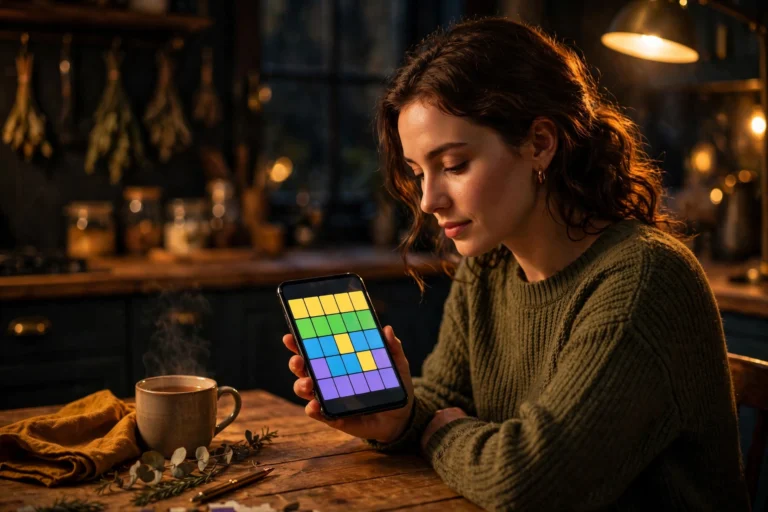
The NYT Connections puzzle is a daily word game from The New York Times that asks you to sort sixteen words into four groups of four, where each group shares a hidden link. One new board appears every day, edited by puzzle editor Wyna Liu. Since its beta launch in June 2023, connections the game has grown into the second most played title at NYT Games, trailing only Wordle.
Plenty of players open the board each morning without knowing where it came from or why it feels so different from its neighbors on the app. This page covers the game’s short history, the editor’s building method, the reasons it spread so fast, and the places you can play. For the full rules and solving strategy, head to our guide on how to play Connections instead; this article stays on the story behind the board.
What Is The NYT Connections Puzzle?
Every nyt connections puzzle presents a four-by-four grid of words, and your job is to find the four sets hidden inside it. Submit four words you believe belong together, and a correct set locks in with a color: yellow for the most straightforward group, then green, blue, and purple for the trickiest. Four mistakes end the game. Each board holds exactly one correct arrangement, no matter how many tempting alternatives the grid suggests.
Categories range from plain sets, like types of pasta, to wordplay that hides inside the words themselves. Red herrings are part of the design: five words might look like a family, yet only four belong together, and the fifth belongs somewhere sneakier. After you finish or fail, the game produces a grid of colored squares that shows your path without naming a single answer.
Players hunting for the ny times connections puzzle sometimes land on fan copies or yesterday’s screenshots. The genuine daily board lives only on official NYT channels, which the next sections cover. Bookmarking the right address saves that confusion for good.
Where The Game Came From
Connections began at an internal New York Times game jam, spent about a year in development, and entered beta on June 12, 2023. NYT Games staff pitch fresh ideas at that annual jam, and the category-sorting concept earned a green light. Editors needed someone to own the new title, and Wyna Liu was the one puzzle editor without a game of her own.
The beta board drew strong numbers fast. By late August 2023, the game had rolled out widely on the NYT Games app for iPhone and iPad, and press coverage already ranked it behind only Wordle in the NYT lineup. Growth never really slowed after that first summer.
Milestones kept arriving on schedule. The 1,000th edition ran on March 7, 2026, with a tile showing the game’s own icon. A sibling title, Connections: Sports Edition, launched with The Athletic in February 2025 after a beta run the previous fall. April Fools’ Day boards turned into a tradition too, with emoji tiles in 2024 and a symbols-and-letters board in 2025.
Boards carry numbers as well as dates. The puzzle for October 29, 2026 was No. 1,236, and the counter climbs by one every morning. That numbering hands long-running players a shared shorthand: a brutal board becomes famous by its edition, and streaks get measured against specific numbers rather than vague memories of last spring.
How Wyna Liu Builds Each Puzzle
Liu starts most boards on paper, jotting clusters of related words in a notebook before she moves the grid into a spreadsheet. She has described that tactile first pass in interviews, and she walked readers through her process in a Times piece titled “How Our New Game, Connections, Is Put Together,” published days after the beta launch. A background in art and jewelry design shapes that hands-on method.
Inspiration comes from lateral places. Liu has credited cartoonist Robert Leighton, known for visual wordplay in his cartoons and puzzles, as an influence on her trickier categories. Her boards carry a recognizable voice: punny purple labels, sets that nod to songs or slang, and decoys planted exactly where a confident solver steps first.
Building a fair board takes more than four cute categories. Words get tested for second meanings, since a stray double fit would give the grid two solutions. Group difficulty gets balanced by feel, with the straightest set placed at yellow and the wordplay saved for purple. When a “one away” warning flashes on your screen, that near-miss was usually engineered, not accidental. Our explainer on what one away means breaks down that moment in detail.

Why Connections Spread So Fast
A spoiler-free results grid did for Connections what the green and yellow squares did for Wordle: it turned every solve into a tiny story friends could read at a glance. Sharing your colored rows shows the shape of your game, including the heartbreak of three purple guesses in a row, without giving away one category. Group chats adopted those grids within weeks of the beta.
Scarcity helps as well. One board per day means the whole internet argues about the same sixteen words at the same time, and missing a day cannot be fixed with a binge. Wordle proved that rhythm years earlier, yet Connections added live debate: players defend rival groupings before anyone knows the answer, and a single word can split a chat for an hour.
Personality sealed the deal. Solvers talk about Liu like a friendly rival, half admiring and half mock-annoyed at her latest trap. Boards that reference current slang or beloved movies feel written by a person, not generated by a committee. Fans even mark the game’s anniversaries, and the editor’s name trends whenever a purple group lands especially hard.
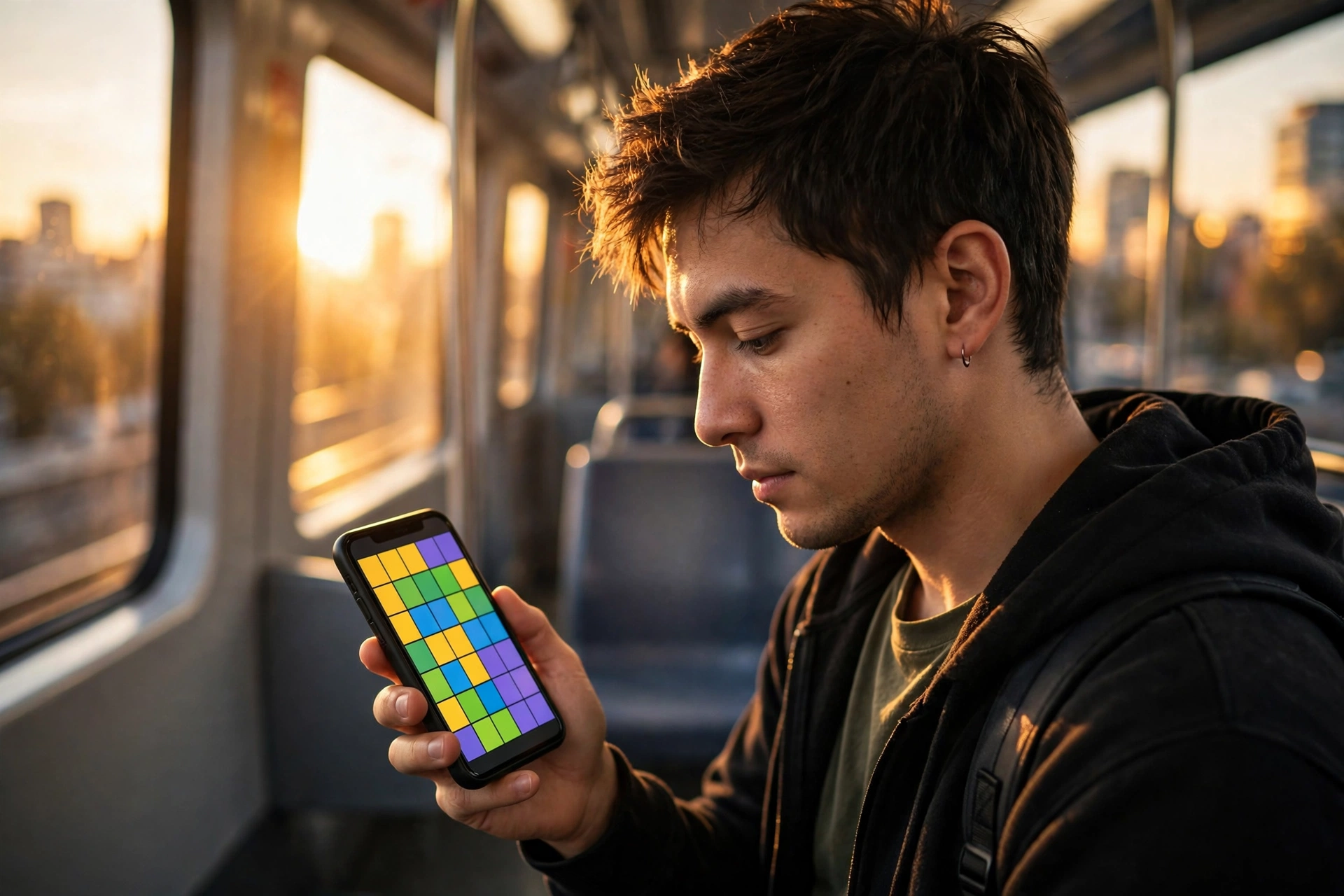
Ritual does the rest of the work. Breakfast tables, train rides, and office coffee runs now come with a shared sixteen words, and a solved board feels like a small daily win before the real day starts. Missed mornings sting because the conversation moves on without you; yesterday’s grid reads as old news by lunch. That gentle pressure keeps players returning far more reliably than any notification could.
Where To Play The Connections Game
You can play connections game free each day on the NYT Games website or in the NYT Games app for iPhone and Android. The daily board asks for no payment, and a free account lets the app track your streaks and stats across devices. Open the Games section, tap Connections, and today’s sixteen words load with the standard four-mistake limit.
Playing on the web suits a desktop routine, while the app suits a commute. The app keeps Connections beside Wordle, the Mini Crossword, Spelling Bee, and Strands, so a full morning round takes one thumb and about ten minutes. Progress syncs between web and app when you sign in, and your stats page records perfect games, win percentage, and current streak. None of those extras costs money; the paywall guards the back catalogue, not the daily habit.
Older boards sit behind the subscription line. A NYT Games subscription opens the official archive of past puzzles inside the app and on the site, which is the only archive the Times itself maintains. The company guards that library: in November 2024 it sent a cease-and-desist letter to an unofficial site that had been republishing past boards. Fans who missed a morning should treat free archive sites with caution, since boards posted there can carry errors or vanish without warning.
Missed days still leave one consolation. Sites like ours keep spoiler-free hints for the current board on the ConnectionsHints homepage, refreshed every morning in stages. Hints nudge you toward the groups one layer at a time, so a stuck morning can still end with your streak alive.
How Connections Differs From Wordle And Strands
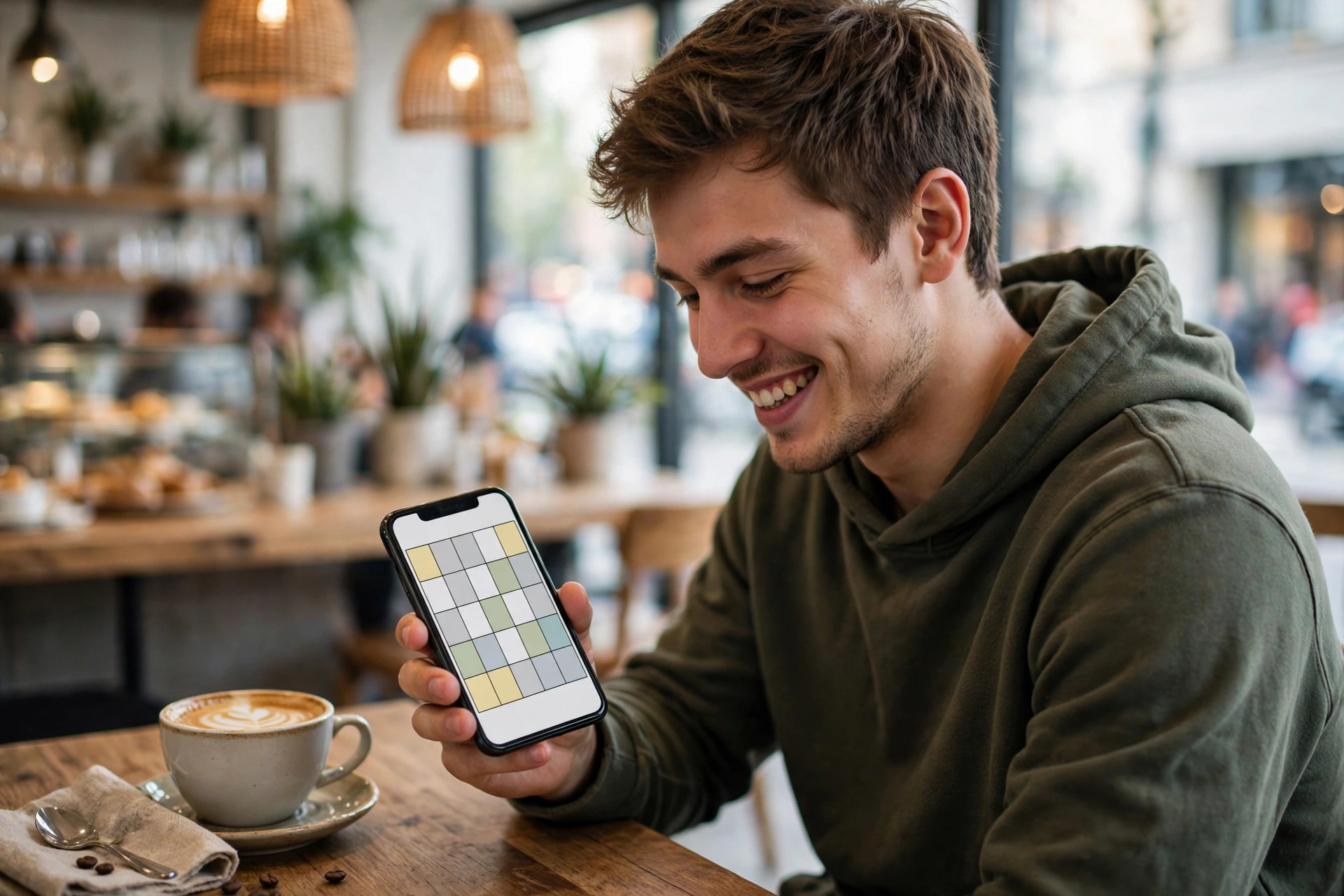
Connections asks you to sort ideas, while Wordle asks you to spell one word and Strands asks you to find words hidden in a letter grid. All three reset daily and share results in colored tiles, yet a morning with each one feels distinct. The table below lines up the differences that matter most.
| Feature | Connections | Wordle | Strands |
|---|---|---|---|
| Core task | Sort 16 words into 4 groups of 4 | Guess one five-letter word | Find theme words inside a 6 by 8 letter grid |
| Tries | 4 mistakes end the game | 6 guesses | No mistake limit; hints cost found words |
| Signature twist | Red herrings and wordplay groups | Letter feedback after each guess | A spangram that spans the whole board |
| Editor | Wyna Liu | Tracy Bennett | Tracy Bennett |
| Launched | Beta on June 12, 2023 | Public launch in October 2021, joined NYT in 2022 | March 2024 |
| Results share | Grid of 16 colored squares | Grid of green, yellow, and gray squares | Colored dot trail of your solve order |
Skill sets barely overlap between the three. Wordle rewards vocabulary and letter frequency sense. Strands rewards patience and pattern scanning across a crowded grid. The new york connections puzzle rewards lateral thinking: knowing that four words can precede “cake” matters more than knowing how to spell them. Players who rotate through all three each morning exercise three different muscles, which is exactly why the NYT app keeps them side by side.
Getting Help Without Spoilers
The fastest way to improve is to learn how the color ladder works, then reach for hints in small doses. Our breakdown of the Connections colors shows what yellow through purple usually signals, and the purple category guide explains why the last group so often turns on wordplay. Reading those two pages changes how a fresh board looks within a week.
When a morning board refuses to crack, take a hint before you take a guess. Guesses are the scarce resource in this game, and a hint spent early protects the three mistakes you will want later. Pride costs more boards than difficulty ever will.
Staged hints respect that balance better than a full answer page. A first hint might name a theme area, a second might confirm one word, and only the last level hands over a complete group. Working through those stages keeps the solve yours, even on a morning when the board refuses to budge.
Frequently Asked Questions
Who makes the NYT Connections puzzle every day?
Wyna Liu, a puzzle editor at The New York Times, writes and edits each daily board. She joined the Times as a puzzle editor in 2020 and took on Connections after it was greenlit from an internal game jam.
When did Connections launch?
The game entered beta on June 12, 2023, after roughly a year of development inside NYT Games. It rolled out widely on the NYT Games app in late August 2023 and quickly became the site’s second most played game.
Is the NYT Connections puzzle free to play?
Yes. The daily board is free on the NYT Games website and in the NYT Games app. A paid Games subscription adds the official archive of past puzzles and extra stats features.
How many mistakes do you get in Connections?
You get four mistakes. A fourth wrong guess ends the game and reveals the remaining groups. The game also warns you with a “one away” message when three of your four picks are correct.
What is the difference between Connections and Wordle?
Wordle asks you to guess one five-letter word in six tries, using letter feedback. Connections asks you to sort sixteen words into four groups of four, with four mistakes allowed and categories ranked by color.
Where can I play yesterday’s Connections puzzle?
The official archive of past boards sits inside the NYT Games app and website for subscribers. Unofficial archives exist, but the Times has challenged sites that republish its puzzles, so the subscriber archive is the reliable route.